
* SuperFlex Open Field *
The SuperFlex is a powerful and versatile open field system for tracking animal movement and behavior. It uses a 16×16 infrared grid to monitor animals in standard or custom-sized cages, with recorded data analyzed through Omnitech’s Fusion software. This software allows for flexible experiment design, multi-animal tracking, and long-term studies, while generating visual outputs like heat maps and path plots. The system is easy to set up with plug-and-play USB connectivity and can handle up to 32 systems on a single PC, making it ideal for high-throughput research. SuperFlex offers customizable sensor configurations and integrates smoothly with other lab equipment, providing a flexible, scalable solution for behavioral research.
The SuperFlex
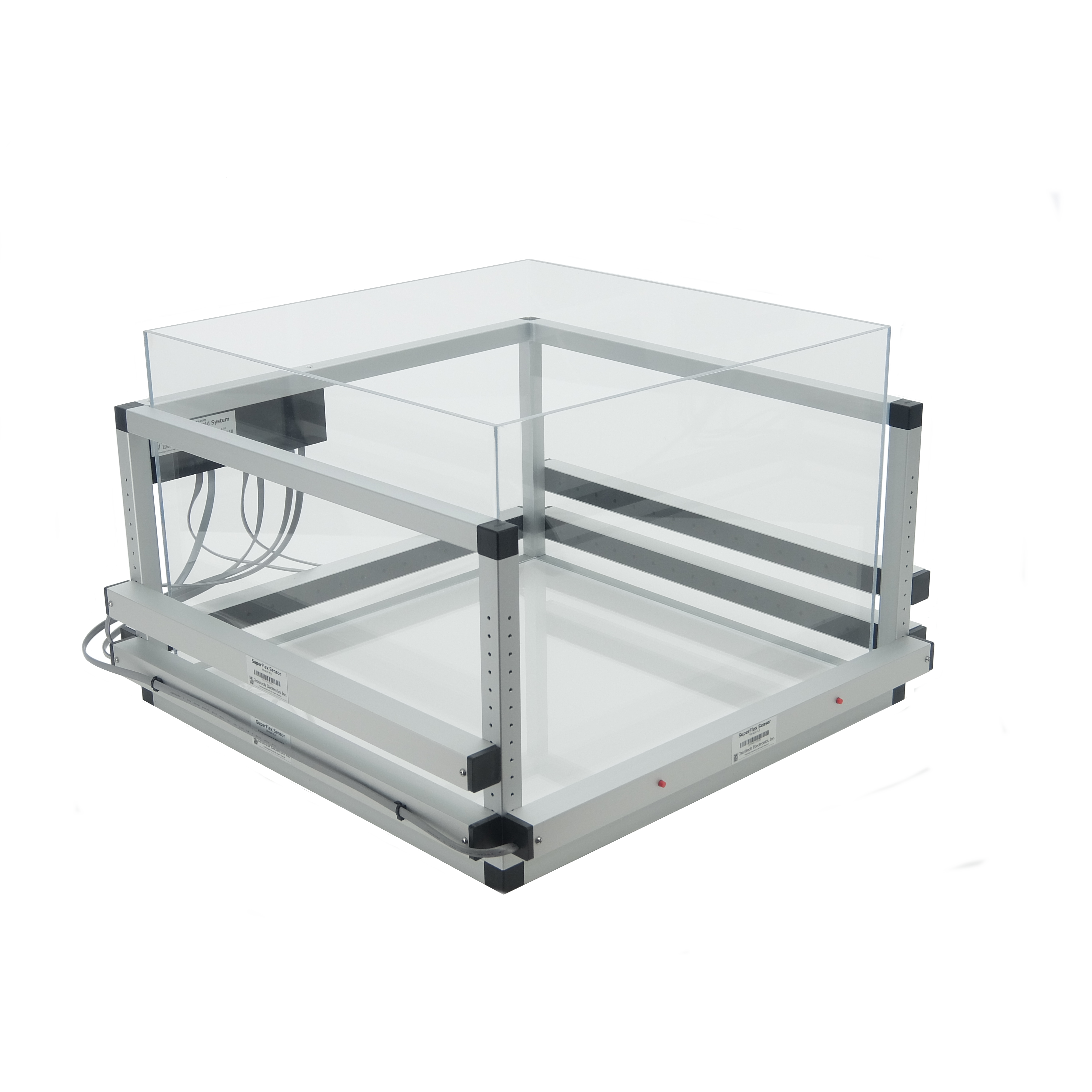
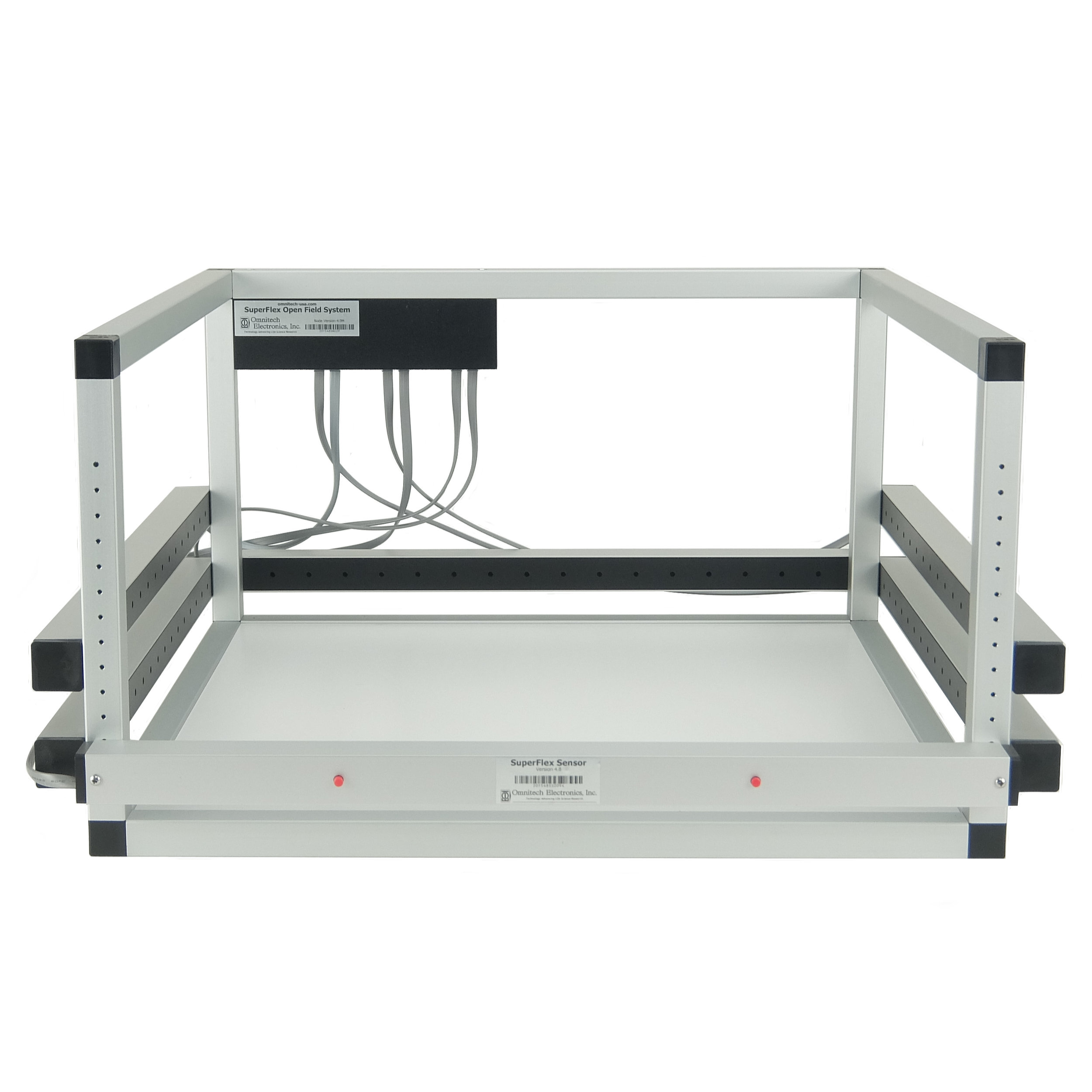
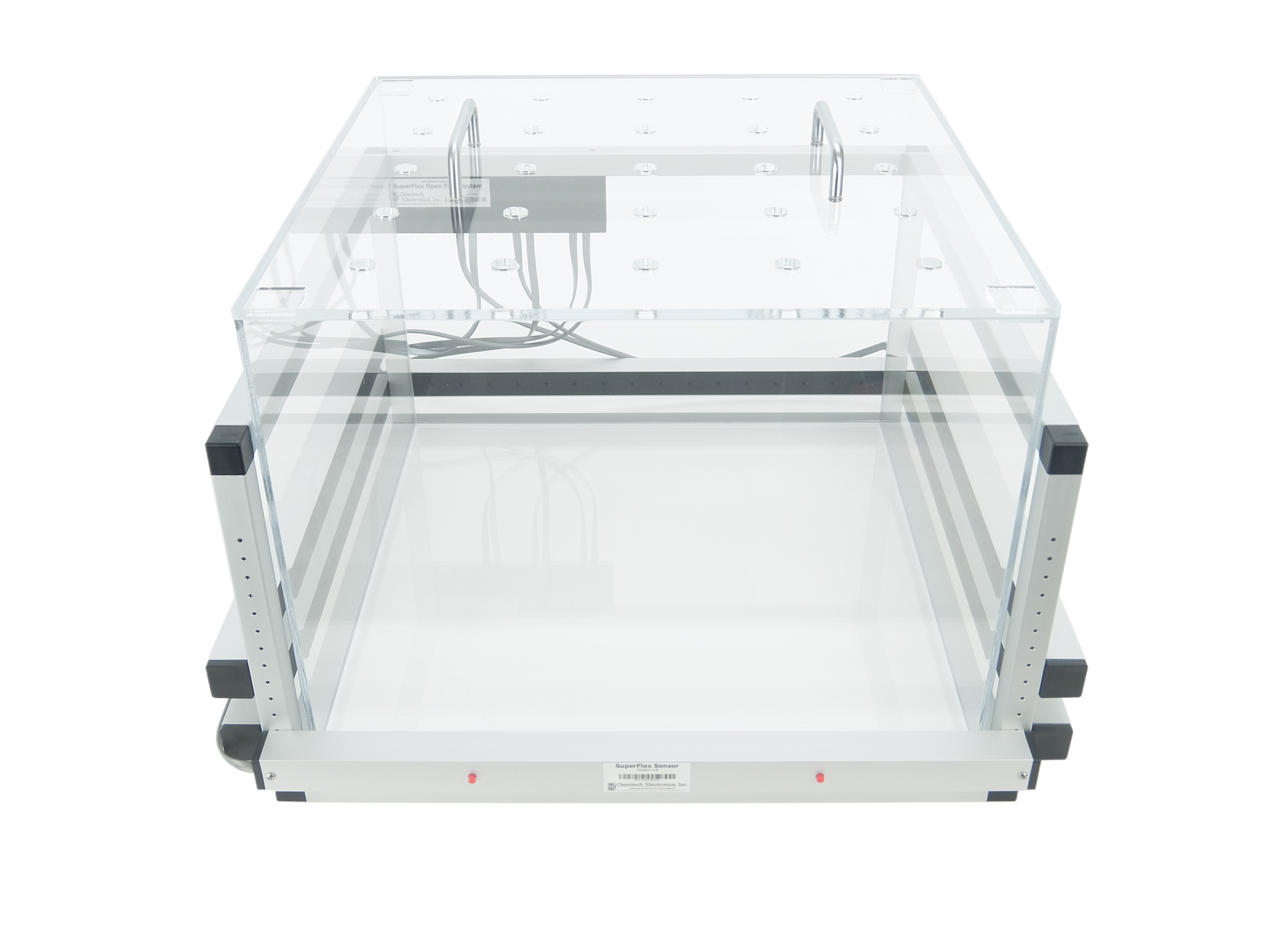
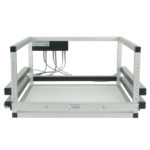
The SuperFlex is a powerful and extremely versatile open field system that allows a researcher to track the location and certain behaviors of a subject animal. This is done via photosensors which create a 16×16 infrared grid. The subject animal’s movement interferes with the infrared beams and these interferences are recorded and analyzed by the Fusion software.
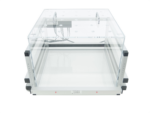
Each standard SuperFlex cage frame accommodates an industry standard 16 inch by 16 inch acrylic or polycarbonate cage. We are also able to custom manufacture cage frames to meet any size required by a research project.
The biggest advantage of the SuperFlex open field is its ability to seamlessly integrate with our other research products, allowing the researcher to greatly expand the capabilities of their lab without the added burdens of sacrificing space and dealing with incompatible equipment
The Fusion Software
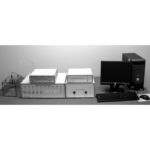
The heart of the SuperFlex open field system is the Fusion software. A wide variety of experiments can be designed and run with ease. The Fusion software is capable of recording and timestamping every cage event and it can be used to run multi animal and multi day experiments.
Once the experiment data is recorded, it can be archived and reanalyzed as many times as needed. In addition, as improvements and upgrades to the software become available, archived data can be reanalyzed using the new features.
The Fusion software is also able to transform data into eye-catching and impressive visual models such as heat maps and path plots, which are very useful for publishing research.
 Powered by Bioz
You may also like…
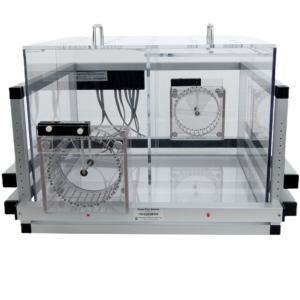
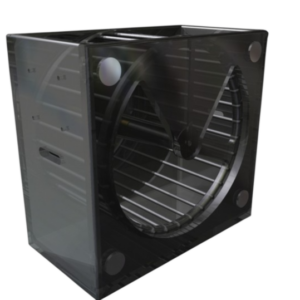
Activity Wheel
The Activity Wheel is designed to measure voluntary physical activity in rodents, making it an essential tool for research in exercise physiology, motivation, and circadian rhythm regulation. By capturing running behavior in real time, the wheel allows researchers to assess activity patterns, endurance, and daily rhythmicity. Integrated with a magnetic sensor and Fusion Software, it provides precise, automated tracking of wheel revolutions. The standard 6.5” wheel suits mice, with optional sizing for rats or custom needs. An optional Dual Wheel Kit enables simultaneous testing of two animals, supporting high-throughput, behaviorally relevant data collection in a naturalistic and enriched environment.
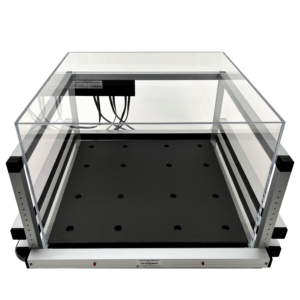
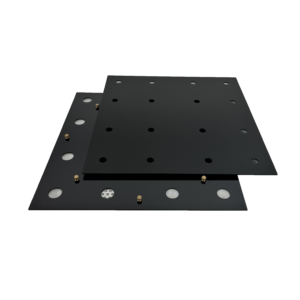
Baited Hole Board
This system features an elevated platform with 16 equally spaced holes, each large enough for an animal to investigate without passing through. Beneath each hole is a food or reward cup, some of which are covered by removable screens, allowing the animal to see and smell the reward without retrieving it. Light beam sensors monitor which holes the animal investigates, tracking the time, duration, and location. Over time, animals typically make fewer mistakes and reach the target holes faster, allowing researchers to measure learning and behavior.
Conditioned Place Preference
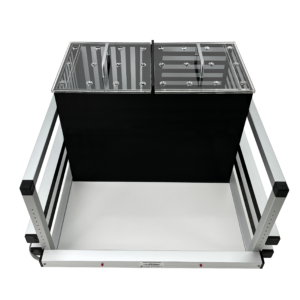
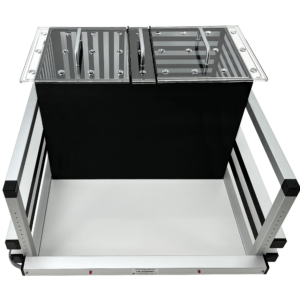
The Conditioned Place Preference (CPP) and Conditioned Place Aversion (CPA) systems are used to study animals' preference or aversion to stimuli, such as drugs, through Pavlovian conditioning. The protocol consists of three phases: habituation, conditioning (associating the drug with a cue), and testing where the animal chooses between the drug-associated and neutral cues. If the drug induces preference, the animal spends more time near the drug cue, or less time if it induces aversion. Sensors track variables like locomotor activity, time spent, entries into compartments, and movement, providing detailed data on the animal's response to the conditioning.
Dark Enclosure
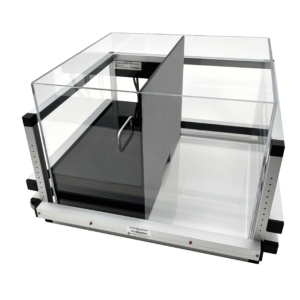
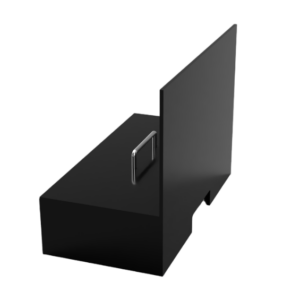
The light/dark box test assesses anxiety in rodents by measuring their preference for dark versus brightly lit areas with more time in the dark suggesting higher anxiety. The Fusion system automates this by dividing the cage into light and dark zones, tracking behaviors like movement, time spent, and activity levels to provide detailed anxiety-related data.

Environmental Control Chamber
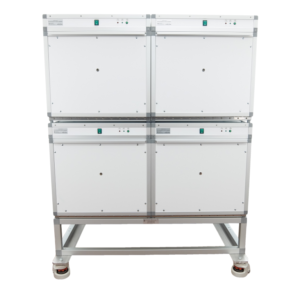
The Environmental Control Chamber (ECC) is designed to minimize external influences on experimental subjects, reducing environmental bias. It works in conjunction with the SuperFlex Open Field system, providing uniform lighting and sound attenuation, ideal for light- and sound-sensitive experiments. Lighting duration and intensity can be programmed, simulating day/night cycles. The stackable design saves space, with optional mobile bases for easy transport and cleaning. The ECC powers the open field setup with a single cord, and features a silent, user-controlled fan to manage airflow and temperature.

Novel Object Base
The Novel Object Base for the SuperFlex open field system allows researchers to conduct automated novel object recognition studies. It features magnetic podiums to securely position objects without interfering with locomotor tracking. Objects can be attached using various methods like zip-ties or Velcro. Vertical sensors track when animals interact with the objects, and the Fusion software's Zone Designer enables automated tracking by drawing zones around the objects. Data can be exported to analyze locomotor activity and object interaction within specific zones.
Stimulus Hub
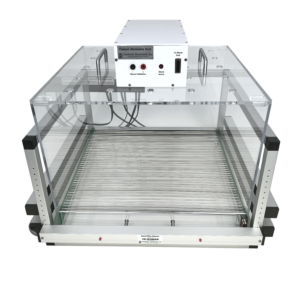
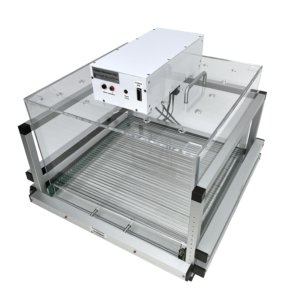
The Stimulus Hub is a system designed to test animal responses to anxiety-inducing stimuli (light, sound, and shock) while tracking movement through integration with the Fusion system. It can run tests on up to 16 animals at once, with programmable intensity, duration, and sequence for each stimulus. The system measures latency in response to stimuli, including movement and rearing. Each experiment consists of multiple "repetitions" of light, sound, and shock events, with customizable parameters for timing, intensity, and order. The software analyzes the response times and movement during the tests.